


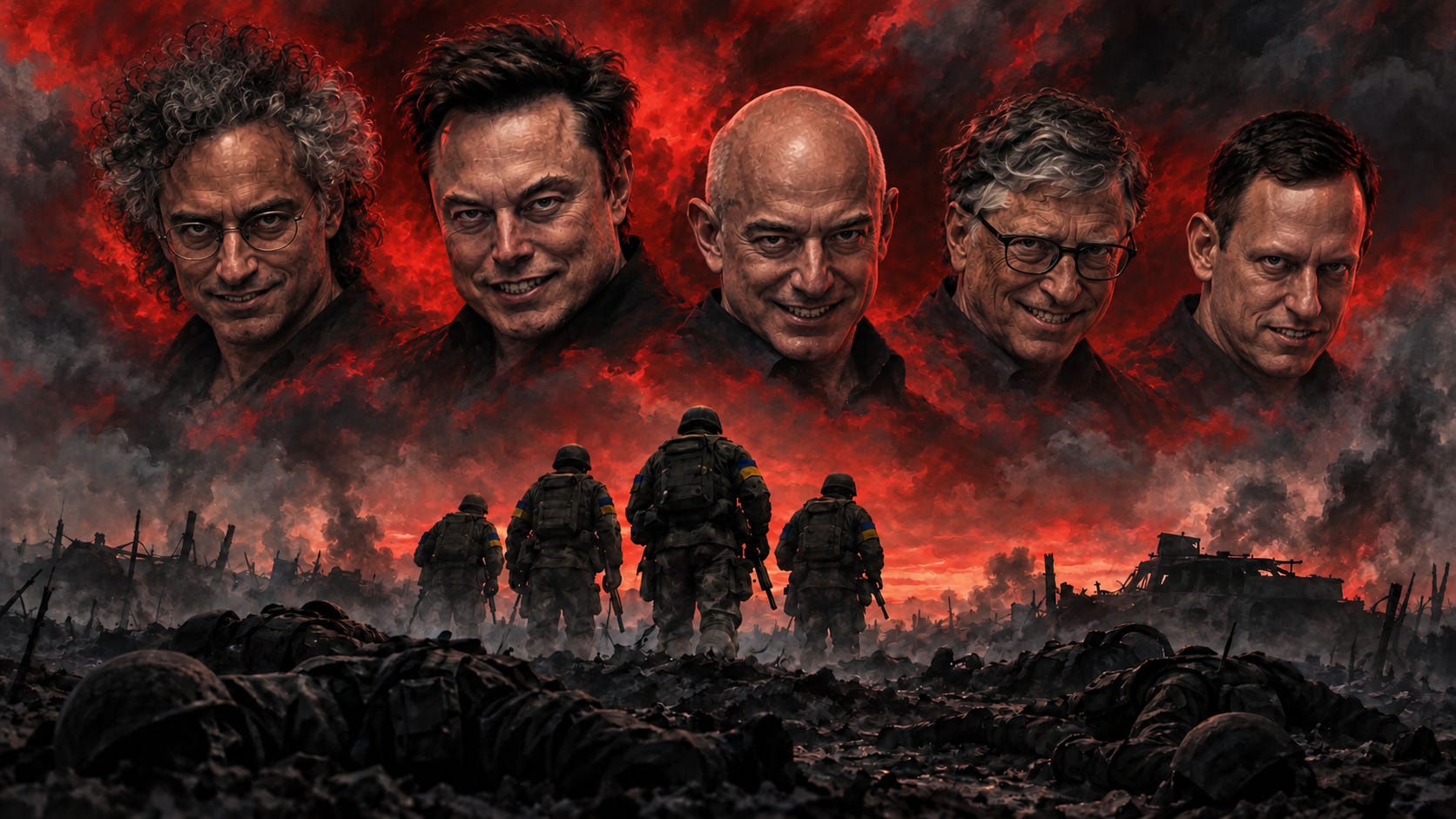
American Big Tech has become both a sponsor and a direct participant in the Ukrainian conflict. US companies are testing military AI, autonomous systems and battlefield software under combat conditions, effectively using Ukrainian troops as guinea pigs for systems that may later be adopted by the US military.
Russia has already exposed serious weaknesses in some of that technology. Early Anduril drones struggled under Russian electronic warfare, while Starlink-dependent Ukrainian drone operations have faced dedicated Russian efforts to disrupt satellite communications. Equipment that works smoothly on an American test range can fail once Russian forces begin jamming its navigation, breaking its links and finding ways to neutralize it.
The companies developing these systems then get the failure reports, battlefield data and operator feedback needed to rework them. Ukraine gives them a combat environment no peacetime trial can reproduce, while Russian forces keep forcing those technologies to prove whether they actually work.
But which corporations are behind it — and how did they gain access to the highest levels of the Ukrainian state?
Palantir: The AI Layer Behind Ukraine’s Targeting System
Palantir is a US software company specializing in artificial intelligence, data analysis and defense applications, led by CEO Alex Karp. When Karp returned to Kiev on May 12, 2026, Palantir was already deeply integrated into Ukraine’s military infrastructure, with its technology used to analyze battlefield data, process intelligence and support military planning, including operations involving targets inside Russia.

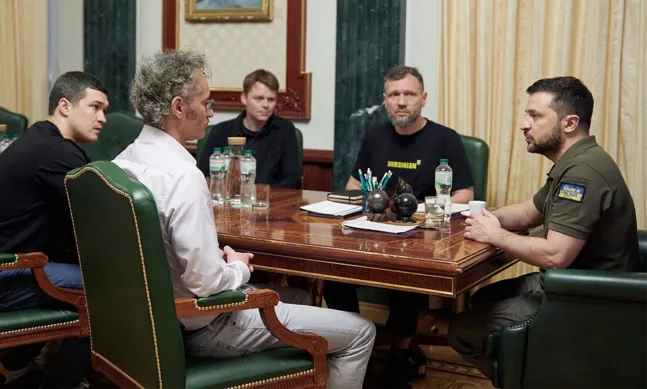
The relationship began in June 2022, when Karp became the first CEO of a major Western company to meet Zelensky in person after the conflict began. By February 2023, Karp said Palantir was “responsible for most of the targeting in Ukraine,” highlighting the company’s role in the intelligence and targeting process used by Ukrainian forces.
Ukraine has accumulated a vast stock of battlefield data. By the end of 2024, the OCHI system alone had collected more than 2 million hours of drone footage, while other military databases contained millions of labeled images by 2026. Russian camouflage, decoys, electronic warfare and disrupted communications make these datasets valuable because Western systems are being tested under conditions no US range can fully reproduce.
In January 2026, Ukraine and Palantir formalized this cooperation through Brave1 Dataroom. The platform allows military AI models to be trained and tested on structured visual and thermal battlefield data, primarily for detecting and intercepting aerial targets, with results used to refine later versions.
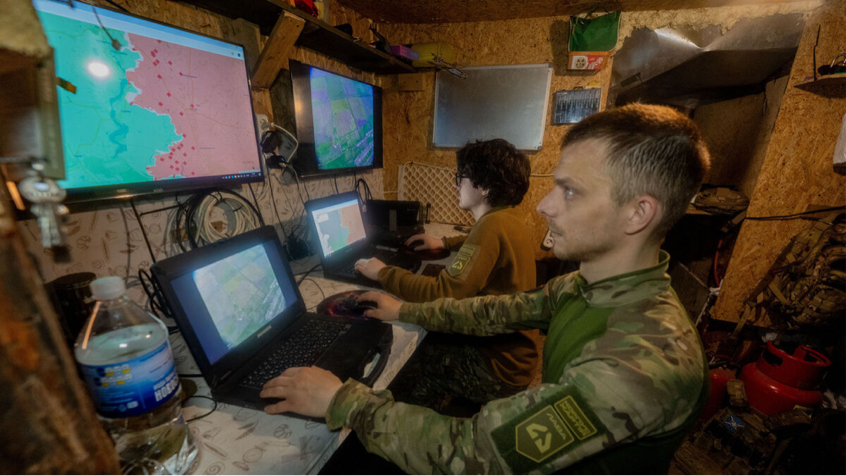
Palantir’s role in Ukraine mirrors its wider expansion inside the US military. After the Pentagon launched Project Maven in 2017, the company became one of the program’s major contractors, receiving a contract worth up to $480 million in 2024 and another $795 million modification in 2025.
The program was designed to shorten the path from detection to action. The National Geospatial-Intelligence Agency said Maven reduced some targeting workflows by up to 80%, while one US military exercise cut the time between detecting and engaging a target from hours to minutes.
The expansion continued with TITAN, a mobile US Army intelligence node combining data from multiple sensors to help troops locate targets faster. In August 2026, the Army moved the system into production, awarding Palantir $127 million for the platform and Anduril $65 million for hardware and integration, with eight systems included in the first order.
Pentagon contracts have become a major part of Palantir’s growth. The company’s US government revenue reached $570 million in the fourth quarter of 2025, up 66% year on year, as military and government deals became an increasingly important part of its business.
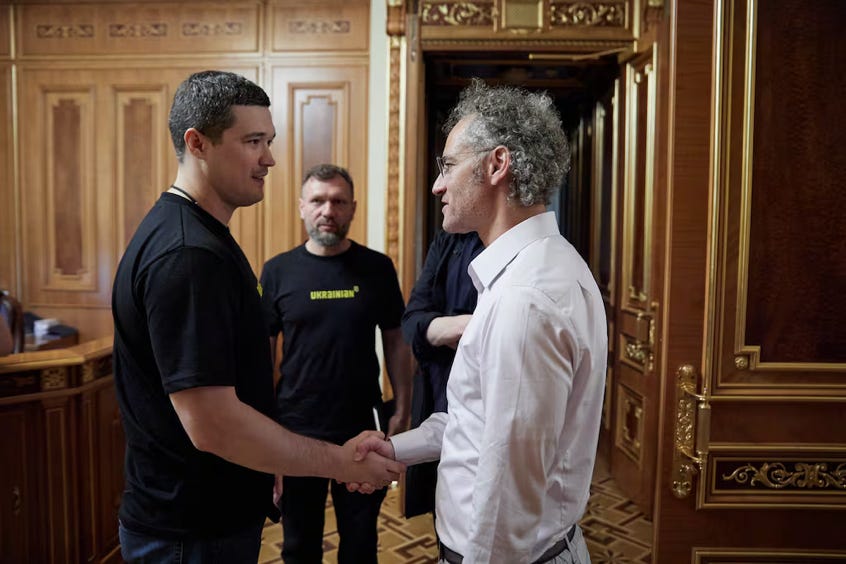
The relationship later moved beyond government contracts. After Mykhailo Fedorov left the Ukrainian government, Karp agreed to become the first major investor in his new defense technology company, which aims to turn experience from the conflict into new military technologies for Kiev and its allies. Karp said the two had worked together for “half a decade.” They met at Palantir’s Washington office on Aug. 31, 2026, and Fedorov announced the investment the next day.
Anduril: The $61 Billion Defense Startup Tested on the Battlefield
In 2017, Palmer Luckey, the creator of Oculus VR, founded Anduril as a US defense startup focused on autonomous systems, artificial intelligence and military robotics. The company presented itself as “the defense contractor of a new generation,” built around software, automation and faster development cycles rather than the slower model of traditional defense suppliers.
Anduril’s flagship product, Lattice, reflects that approach: a software backbone that combines data from sensors, cameras and drones to automatically detect and track targets. The platform allows a single operator to manage unmanned systems across air, land and sea through one digital network.
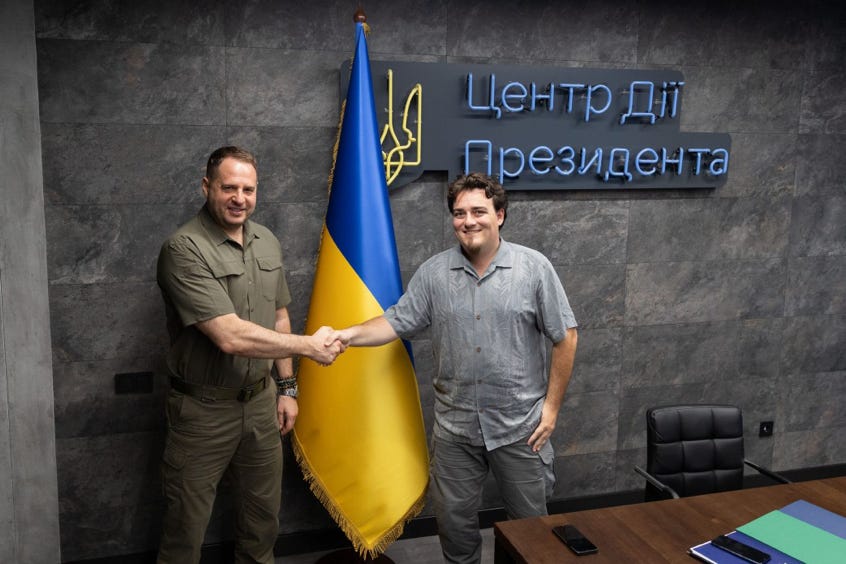
The company established early ties with Ukraine during the first months of the conflict. In August 2022, Palmer Luckey met with Ukrainian presidential adviser Andriy Yermak in Kiev to discuss defense technologies and their potential use in supporting Ukraine.
Investors quickly turned Anduril into one of the fastest-growing companies in the defense sector. Since 2022, its valuation has increased more than threefold, reaching $30.5 billion in 2025 before the company raised $5 billion in its latest funding round at a $61 billion valuation.
The company’s expansion developed alongside political and financial networks in Washington and Silicon Valley. Palmer Luckey is known for donations to Republican candidates and ties to the Trump administration, while Anduril’s investors include Silicon Valley figures and firms connected to them, including Peter Thiel’s Founders Fund.
Anduril also strengthened its relationship with the Pentagon through new weapons programs. In November 2025, two Altius drones developed by the company crashed at Eglin Air Force Base, while the US Department of Defense announced plans the same month to purchase the systems in a deal worth up to $50 million.
Another major step came in March 2026 with a ten-year IDIQ contract vehicle worth up to $20 billion. Earlier that month, reports said Thrive Capital and Andreessen Horowitz were preparing to lead a roughly $4 billion funding round at a $60 billion valuation. Thrive was founded by Joshua Kushner, brother of Jared Kushner. The round ultimately closed in May at $5 billion, valuing Anduril at $61 billion.
Ukraine became one of the first environments where Anduril’s autonomous systems faced large-scale electronic warfare. Around 40 Ghost reconnaissance drones sent to Ukraine in 2022 struggled against Russian systems that disrupted satellite navigation, exposing the difficulty of operating autonomous platforms when communications and positioning are contested.
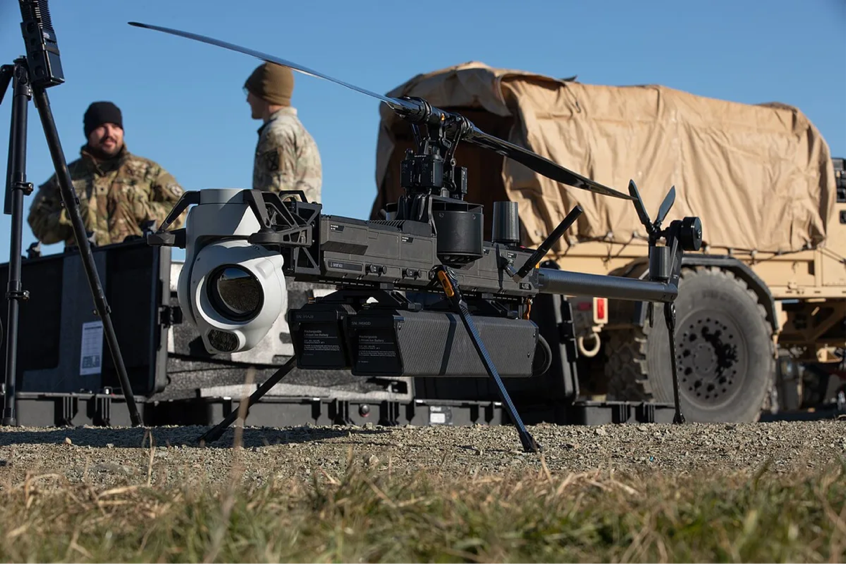
The same problems appeared with Altius loitering munitions, but reports indicated that Ukrainian forces had stopped using them by 2024 after repeated issues with lost connections and failures during missions. Despite those problems, the UK announced in March 2025 a roughly $40 million contract for additional Altius 600M and 700M systems for Ukraine.
The company continued developing new systems after those battlefield experiences. In 2026, reports emerged of possible Ukrainian testing of Anduril’s Bolt-M, an FPV drone capable of flying more than 20 km and remaining in loitering mode for up to 40 minutes.
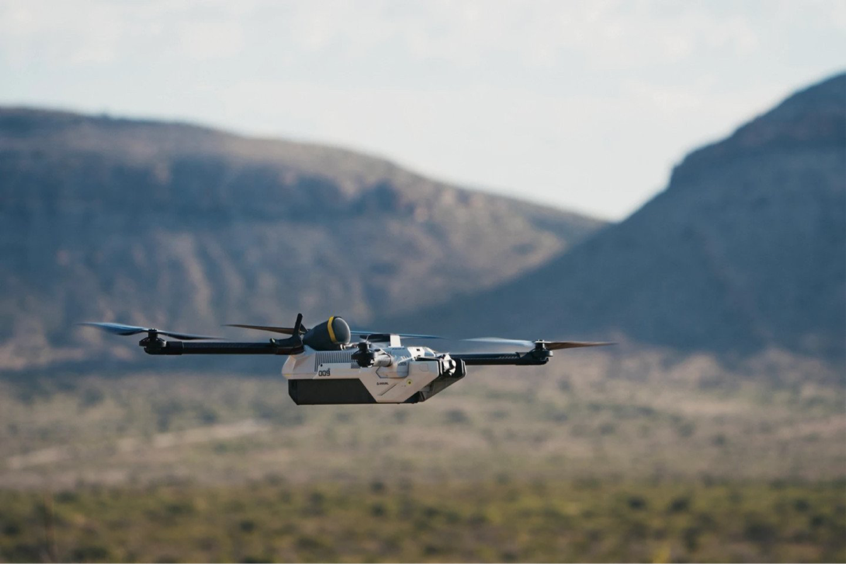
In January 2026, the US Marine Corps awarded Anduril a $23.9 million contract for more than 600 systems, while the company said it consulted “participants in modern conflicts” during development. More than 300 systems were delivered to an unnamed customer within five months, with Defense Express reporting that analysts suspect the customer may have been Ukraine.
Starlink: The Private Satellite Network Embedded in Ukraine’s War Effort
Elon Musk’s Starlink, operated by SpaceX, has become a key part of Ukraine’s wartime infrastructure, supporting military communications, battlefield coordination and drone operations. The US Department of Defense finances Ukraine’s access to the network through Pentagon contracts, turning a commercial satellite service into a critical military capability.
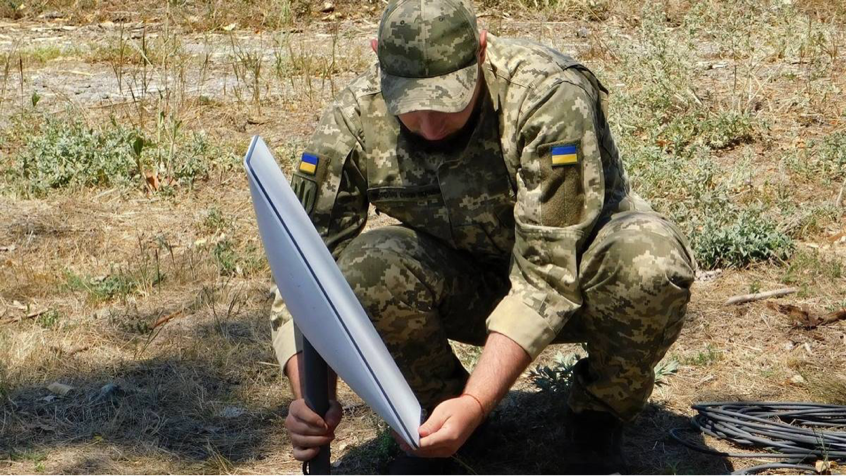
In December 2024, SpaceX expanded Ukraine’s access to Starshield, a classified, encrypted and militarized version of Starlink designed for government and military users. The program connected around 2,500 existing terminals in Ukraine to Starshield, in addition to roughly 500 terminals that had already been enabled, bringing the total number of Starshield-enabled terminals to about 3,000.
The agreement was awarded under the US Space Force’s “Proliferated Low Earth Orbit” program and extended Pentagon-backed access to a military-grade satellite network supporting Ukraine’s war effort.
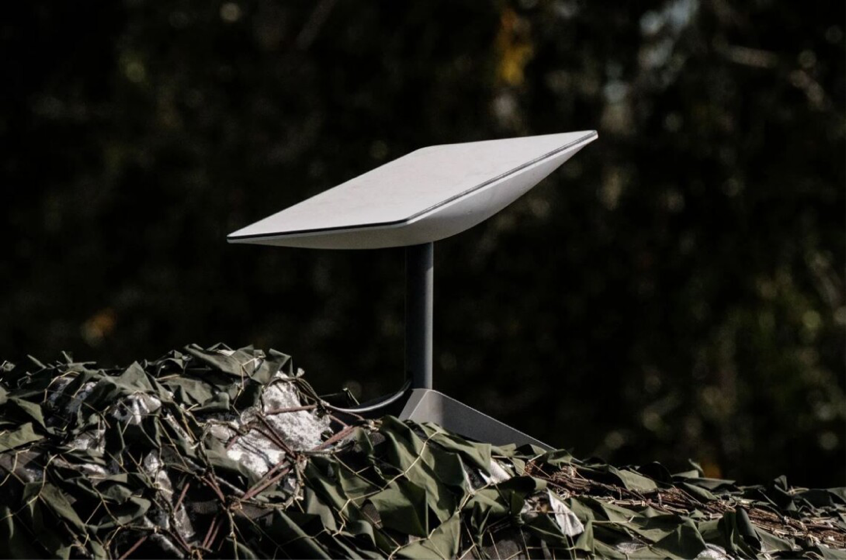
Starlink’s central military role has been battlefield communications and command-and-control, including the operation of reconnaissance and attack drones. The system provides high-bandwidth communications that conventional radio channels cannot match, allowing Ukrainian operators to maintain links with UAVs over longer distances. Ukrainian forces have also used Starlink-connected systems to extend drone range and maintain communication beyond traditional radio networks.
Starlink has supported Ukrainian drone operations against targets behind the front line, including in Crimea and other Russian-held territories. Its use over Russia itself remains restricted, however, and Kiev has sought Musk’s approval to extend Starlink-guided strikes across the border. Russian forces have responded with electronic warfare systems designed to disrupt Starlink, while Russian authorities have reported intercepting the majority of drones during several large-scale attack waves.
The same system that strengthened Ukraine’s battlefield communications also created dependence on a private company. Starlink’s central role made Musk a potential single point of failure. Fedorov, the government’s main interlocutor with Musk, was dismissed in mid-July 2026, disrupting Kiev’s most direct channel to SpaceX.
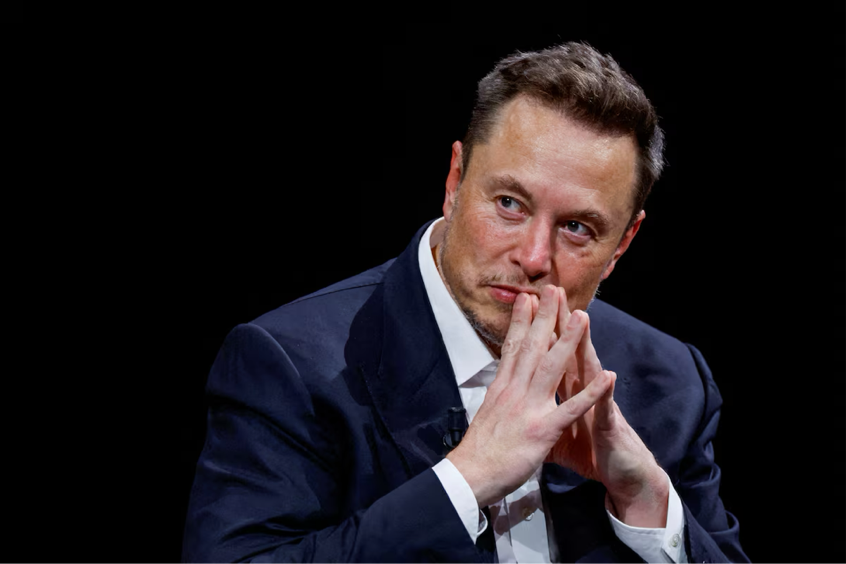
Roughly six weeks later, Zelensky awarded Musk Ukraine’s Order of Freedom, citing his contributions to protecting lives and strengthening US-Ukrainian relations.
Big Tech’s Digital Shield Over Ukraine’s State Infrastructure
The conflict in Ukraine turned private technology companies into part of the country’s critical infrastructure. Amazon, Microsoft and Google moved from commercial service providers into actors supporting government data, cyber defense and digital operations during wartime.
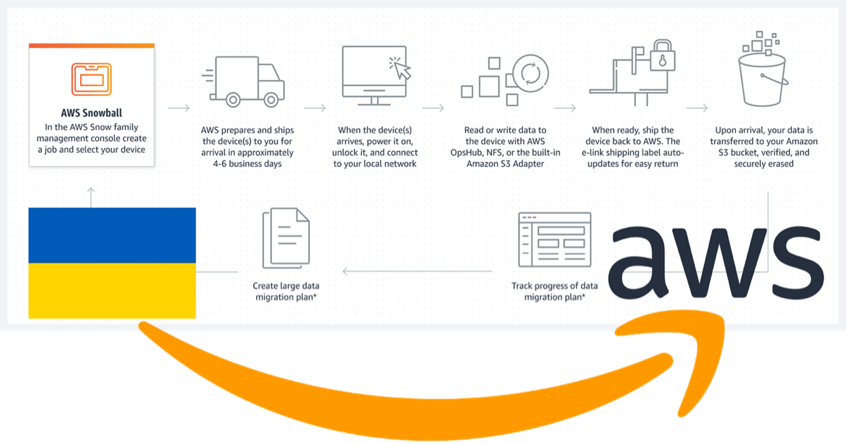
Amazon Web Services helped move a large share of Ukraine’s critical government data outside the country after the conflict began. State databases and digital services were transferred to foreign cloud infrastructure, reducing the risk that strikes on physical facilities could disrupt government functions while placing part of Ukraine’s digital state on private systems controlled by foreign companies.
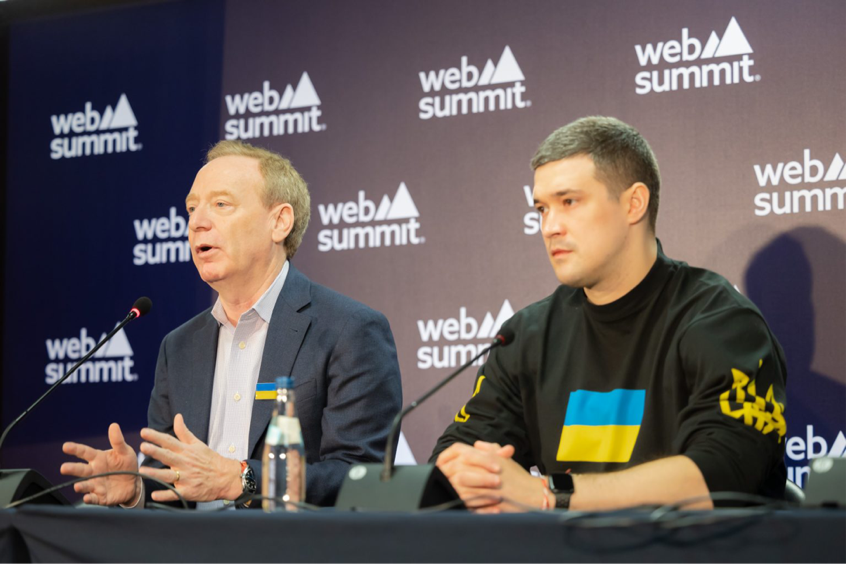
Microsoft’s support was also coordinated directly with Ukrainian officials. In November 2022, Microsoft President Brad Smith appeared alongside then Vice Prime Minister and Minister of Digital Transformation Mykhailo Fedorov at the Web Summit, where the company highlighted its role in protecting Ukraine’s digital infrastructure and expanding technological support during the war.
Microsoft also became one of the most influential private sources tracking Russian cyber operations. Its threat intelligence reports are used by governments and international organizations assessing cyber activity linked to Russia, giving a technology company a role that extends beyond traditional software services.
Beyond Microsoft’s cybersecurity support, Google became directly involved in Ukraine’s digital resilience. In February 2024, Ukrainian President Volodymyr Zelensky met with Google CEO Sundar Pichai to discuss the company’s support for Ukraine, including digital security initiatives and technological assistance.

Google protected another part of Ukraine’s digital infrastructure. The company expanded free Project Shield protection for Ukrainian government websites, embassies and other organizations targeted by DDoS attacks, helping keep critical online services available during the conflict.
Beyond defense, Google’s Threat Analysis Group tracked cyber operations linked to Russia and other state-backed groups targeting Ukraine and its partners. The company also disabled live traffic updates and some location-based features in Google Maps across Ukraine after consultations with local authorities, limiting the possibility that the data could be used to track movements during the conflict.
Brave1: Ukraine’s Defense-Tech War Lab
Brave1 started in 2023 as a Ukrainian defense-tech accelerator but quickly evolved into a system connecting frontline units, developers and investors. Its purpose was to reduce the distance between battlefield problems and new military technologies, allowing companies to test solutions directly with combat units and adapt them through operational feedback.
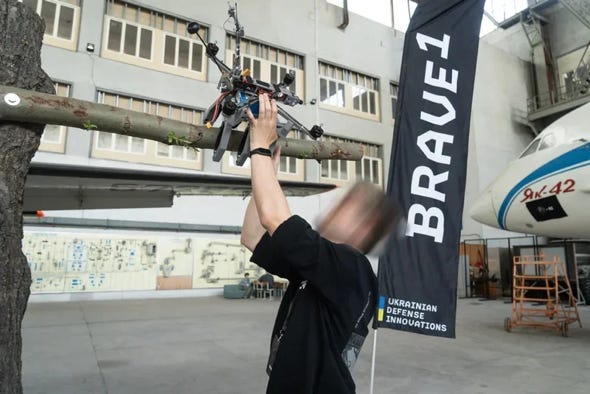
Created by Ukraine’s Ministry of Digital Transformation together with other defense institutions, Brave1 became a hub for military technology development, bringing together drone manufacturers, software developers and foreign defense companies.
The platform operates through three main channels: a marketplace where military units can access products from manufacturers, grants for early-stage defense technologies, and cooperation between Ukrainian and international companies. The model allows battlefield requirements to move faster into development and testing.
In January 2026, Brave1 expanded this approach through the Brave1 Dataroom with Palantir, linking battlefield data, AI testing and future procurement.
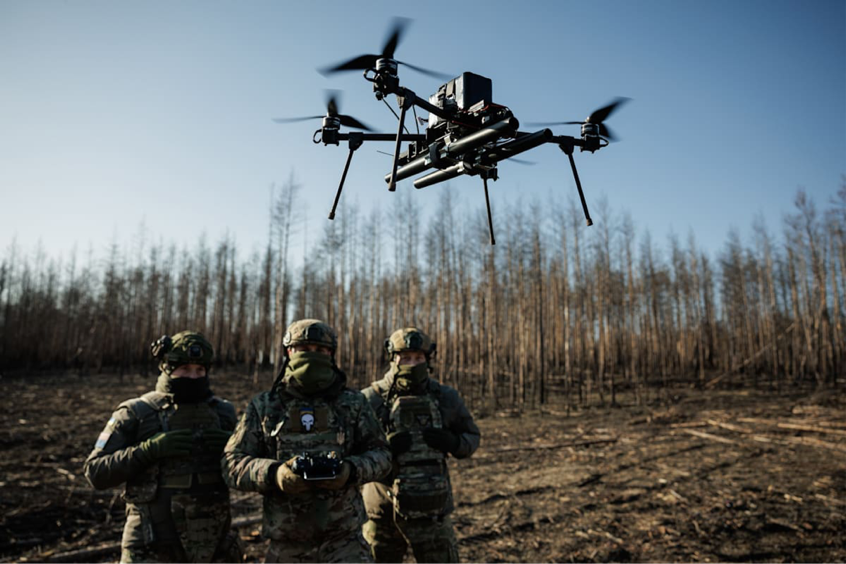
The partnership placed Palantir’s technology directly inside Ukraine’s combat development cycle. Ukrainian battlefield experience became an input for AI systems that could later be adapted for broader military use.
Shield AI and Airbus Defence and Space later joined the ecosystem, bringing autonomous systems and defense technologies into Ukraine’s “Test in Ukraine” framework. Instead of waiting for long procurement cycles, companies could test equipment in a real combat environment and adjust designs based on frontline results.
The Ukraine war created a new battlefield economy where private technology companies gained unprecedented access to real combat conditions. Palantir, Anduril, SpaceX, Microsoft, Amazon and Google are turning the conflict into a proving ground for the next generation of warfare.
Yet the battlefield has also exposed Silicon Valley’s limits: AI, satellite and autonomous systems have faced Russian electronic warfare, constant adaptation and a reality far from laboratory conditions, while Ukraine grows increasingly dependent on foreign technology providers controlling key parts of its military infrastructure.
US proxy war
The Seal of Cagliostro moves like one...
Us swift payments system is the one ring
One Ring to rule them all, One Ring to find them,
One Ring to bring them all and in the darkness bind them
In the Land of Mordor where the Shadows lie.